Choosing Mobile Shelving in 2026 requires more than comparing cabinet prices. It requires a clear view of space, access, workload, safety, and future growth. The 2024 Global Industrial & Logistics Occupier Survey from CBRE highlights continuing pressure on businesses to improve warehouse efficiency and use existing facilities more effectively. That pressure also affects archives, libraries, healthcare storage, and office records.
Mobile Shelving can create dense storage by moving units along floor tracks. Picture a narrow aisle opening only where staff need it. However, higher capacity does not automatically mean better performance. The system must match item weight, retrieval frequency, floor conditions, and user habits. The International Facility Management Association’s workplace research also shows that flexible space planning remains important as organizations redesign work environments. In practice, this means measuring real storage behavior, not trusting a brochure alone.
Look beyond capacity.
Reports from Grand View Research and Mordor Intelligence describe strong growth across warehouse automation and storage technologies. Their findings support the wider shift toward compact, responsive storage systems, although these reports do not measure every Mobile Shelving installation. That limitation matters. A small archive may need manual movement, while a busy medical store could require powered controls, access permissions, and emergency release features. Energy use, maintenance access, noise, load certification, and installation quality deserve equal attention. Some buyers focus too heavily on maximum capacity. I have found that retrieval time and staff confidence often matter more. A careful 2026 decision should compare lifecycle cost, not merely the lowest quotation.
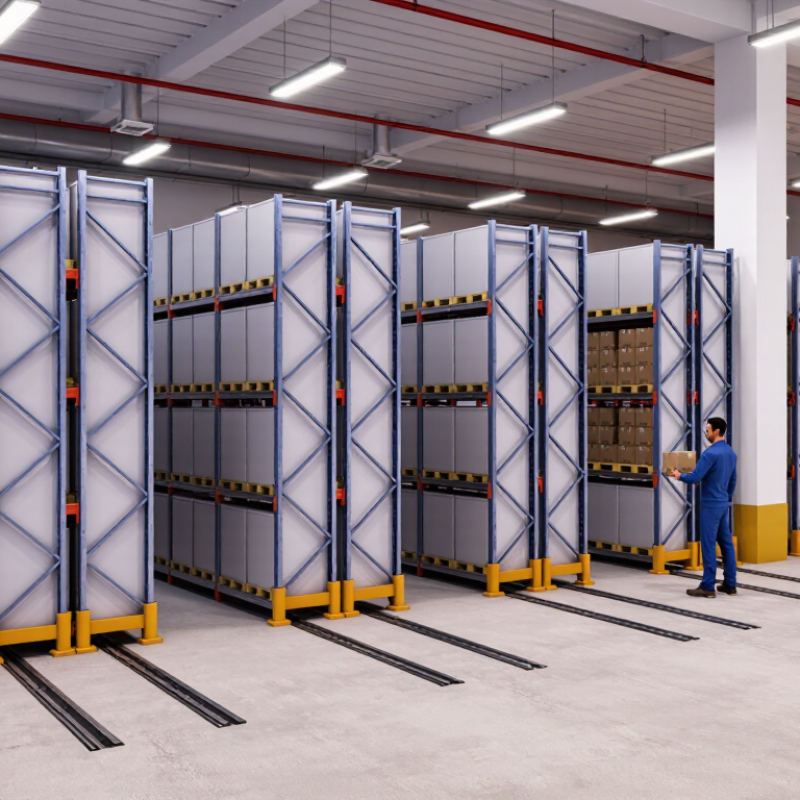
Mobile shelving is a storage system mounted on movable bases. The units slide along floor tracks, reducing fixed aisles between rows. Staff open one aisle only when access is needed. This design can nearly double usable storage space in suitable rooms.
In 2026, mobile shelving serves archives, libraries, clinics, offices, workshops, and retail stockrooms. Paper files may occupy one row, while boxed equipment uses another. Some systems include sensors, electronic controls, and inventory software. These features can show which aisle is open and where items belong. However, technology does not replace clear labels or trained staff.
Choosing the right system starts with measuring room dimensions, floor strength, load weight, and daily access needs. Manual movement may suit light storage and occasional use. Powered movement can help frequent users, but it requires stronger safety controls and maintenance planning. Leave enough clearance for wheelchairs, emergency access, and safe handling. Check local building, fire, electrical, and accessibility requirements before installation. I once underestimated retrieval frequency and created unnecessary waiting time. That mistake still matters. A simple usage log can reveal busy periods before equipment is selected. Dust, humidity, and temperature also affect stored materials, especially paper and sensitive records. Request documented load ratings, service procedures, and user training from qualified suppliers. Claims about capacity should be checked against real measurements, not showroom impressions.
| Dimension | Definition or Planning Data | Why It Matters in 2026 | Recommended Selection Guidance |
|---|---|---|---|
| What Is Mobile Shelving? | Storage units mounted on rails, tracks, or guided bases that move laterally to open access to a selected aisle. The system normally operates with fewer permanently open aisles than fixed shelving. | It can increase storage density without requiring a larger room, provided that safe access, floor loading, fire protection, and operating procedures are properly designed. | Confirm the required storage capacity, available floor area, floor construction, ceiling height, and access requirements before choosing a system. |
| Main Storage Principle | Mobile shelving consolidates unused aisle space and creates an access aisle only where it is needed. Fixed shelving keeps multiple aisles permanently open. | The choice is mainly a balance between storage density, retrieval speed, flexibility, and project cost. | Use mobile shelving when space efficiency is more important than simultaneous access to every aisle. |
| Typical Space-Saving Potential | Approximately 30%–50% less floor area for the same stored volume, or approximately 50%–100% more storage capacity in the same footprint. | Actual results depend on shelf depth, aisle width, unit length, room shape, structural columns, safety clearances, and the amount of space reserved for circulation. | Treat these figures as early planning ranges, not guaranteed performance. Request a layout based on measured room dimensions and actual inventory. |
| Best Use: Archives and Records | Suitable for paper files, boxed records, drawings, legal documents, and long-retention materials that require controlled access but are not retrieved continuously. | Records storage often needs high density, clear indexing, controlled access, and long-term organization. | Specify file sizes, box weights, retention periods, access frequency, labeling, and any fire or environmental requirements. |
| Best Use: Libraries and Reference Collections | Suitable for books, periodicals, reference materials, special collections, and compact shelving areas where aisle access can be managed. | Mobile systems can provide high book capacity while preserving valuable floor area for study, service, or public functions. | Use wider or continuously available aisles where accessibility regulations, public circulation, or assisted retrieval require them. |
| Best Use: Healthcare Storage | Suitable for supplies, medical records, non-sterile inventory, linens, and departmental storage when hygiene and emergency access requirements are satisfied. | Healthcare environments require reliable access, cleanable surfaces, safe movement, and clear separation between storage and clinical circulation. | Verify infection-control procedures, emergency egress, accessibility, load ratings, cleaning requirements, and facility-specific regulations. |
| Best Use: Museums and Collections | Suitable for artifacts, framed works, flat collections, textile storage, and other protected materials that need organized, space-efficient storage. | Collection storage benefits from controlled handling, adjustable layouts, and reduced exposure to unnecessary movement. | Specify environmental controls, vibration limits, padded supports, load distribution, security, and collection-handling procedures. |
| Best Use: Offices and Back-of-House Areas | Suitable for supplies, project files, stationery, equipment accessories, and departmental inventory. | It can convert underused back-office floor area into organized storage while keeping frequently used items accessible. | Choose manual operation for light, occasional use and powered or assisted operation when units are large, heavy, or frequently accessed. |
| Manual Operation | Units are moved by a hand wheel, handle, or mechanical drive. Manual systems are generally appropriate for smaller loads and lower access frequency. | They can offer a straightforward operating method with fewer electrical requirements. | Check the force required to move the fully loaded unit, operator ergonomics, aisle width, and maximum unit length. |
| Powered Operation | Units are moved using electric motors and controls, often with safety sensors, emergency stops, access controls, or programmable functions. | Powered movement can improve usability for heavy, long, or frequently accessed installations. | Specify power supply, control location, backup access, emergency stopping, maintenance access, and user permissions. |
| Load Capacity | Capacity is commonly stated per shelf level and per bay. The correct rating depends on shelf span, shelf material, support spacing, and load distribution. | Overloading can cause shelf deformation, drive stress, instability, or premature component failure. | Calculate the heaviest expected load, not the average load. Use evenly distributed loads unless the system is specifically designed for point loads. |
| Shelf Adjustability | Adjustable shelves allow the clear height of each level to match the stored material, reducing unused vertical space. | Adjustability supports changing inventories and reduces the need for future reconstruction. | Choose tool-free or low-tool adjustment where inventories change frequently, and verify the usable height range. |
| Access Frequency | Low-frequency storage generally tolerates a smaller number of active aisles. High-frequency storage may require multiple open aisles or a hybrid layout. | High density can reduce productivity if staff must repeatedly wait for an aisle to open. | Classify inventory as high, medium, or low frequency and place fast-moving items in fixed or continuously accessible locations. |
| Aisle and Accessibility Planning | Required aisle width varies by user needs, equipment, building rules, and accessibility requirements. A mobile system should not obstruct required routes or exits. | Space efficiency must not compromise safe evacuation, accessible use, maintenance, or daily operations. | Have the layout reviewed against local building, fire, workplace-safety, and accessibility requirements before installation. |
| Floor and Structural Requirements | Track systems transfer concentrated and moving loads to the floor. The floor must be sufficiently level, strong, and suitable for anchoring or surface installation. | Structural limitations can restrict system length, load capacity, location, and installation method. | Obtain floor-load data, inspect the slab, identify expansion joints and services, and request an engineering review when necessary. |
| Safety Features | Common features include emergency stops, anti-collision sensors, end-of-travel limits, aisle lighting, warning indicators, locking controls, and manual override functions. | Moving storage creates mechanical hazards that require prevention, detection, and controlled operation. | Match safety features to the system type, user population, operating frequency, and applicable workplace-safety requirements. |
| Fire Protection | Dense storage can affect sprinkler coverage, smoke movement, fire-fighting access, and required clearances. Requirements depend on building use, storage height, and stored materials. | Fire protection must be considered before the storage layout is finalized, not added after installation. | Coordinate the design with the fire-protection professional, authority having jurisdiction, and applicable local codes. |
| Environmental Control | Paper, artifacts, electronics, textiles, and sensitive materials may require controlled temperature, humidity, light exposure, dust, or pollutant levels. | Higher storage density does not replace the environmental conditions needed to protect the contents. | Define material-specific environmental requirements and confirm that the shelving layout supports airflow, inspection, and maintenance. |
| Mobile Shelving vs. Fixed Shelving | Mobile shelving prioritizes density and controlled access. Fixed shelving prioritizes simple, immediate access to several aisles at the same time. | A mixed layout often provides the best balance for facilities with both fast-moving and long-term inventory. | Use fixed shelving for frequently accessed items and mobile shelving for dense, organized, lower-frequency storage where appropriate. |
| 2026 Selection Checklist | Review capacity, dimensions, load ratings, access frequency, operation type, safety, accessibility, fire protection, floor conditions, power, maintenance, and future expansion. | A complete evaluation reduces the risk of selecting a system that saves floor space but performs poorly in daily use. | Compare at least two layout options using total cost of ownership, retrieval time, capacity, compliance, maintenance, and future flexibility. |
Planning ranges are indicative and vary by building conditions, storage materials, equipment dimensions, local regulations, and the final system layout. Confirm all structural, fire-safety, accessibility, and operational requirements with qualified professionals before installation.
Count items by size, weight, type, and retrieval frequency. Estimate growth for three to five years. Do not rely only on average demand. Peak days may expose serious access problems.
Measure walls, ceiling height, doors, columns, floor strength, and emergency routes. Mark proposed aisles with tape for one week. Observe walking distance and retrieval delays. Real use may challenge the drawing.
Leave a practical aisle for safe access and evacuation. Minimum dimensions may feel too narrow during busy periods. Keep fast-moving items near the main access point.
Mechanical systems may suit lighter loads and lower movement frequency. Powered systems reduce physical effort for dense, frequently moved bays. Automation is not automatically safer. Training still matters.
Powder-coated steel resists impacts and cleans easily. Galvanized steel suits humid rooms. Wire shelves improve airflow and visibility. Laminate panels create a cleaner archive appearance.
Confirm floor loading with a qualified installer or structural professional. Measure the heaviest planned load, not today’s average load. Uneven floors can cause binding. This detail is easy to miss.
Look for anti-collision sensors, emergency stops, controlled acceleration, and manual overrides. Use clear aisle indicators and practical operator training. Keep lighting, handles, and walking paths unobstructed. People still matter.
Include maintenance, energy use, training, software updates, sensors, downtime, and spare parts. Compare ownership costs across ten years, not only purchase prices. A cheap quote may hide disruption. Complex features may also become unused.
Choosing Mobile Shelving in 2026 requires a clear understanding of your facility’s storage goals, available space, and daily access needs. Mobile Shelving systems can improve storage capacity by reducing unused aisles while keeping materials organized and accessible. Before selecting a solution, assess the size, weight, volume, and retrieval frequency of stored items, as well as floor conditions, ceiling height, workflow, and future expansion plans. Compare manual and powered systems, different shelf configurations, materials, load capacities, and customization options to find the right balance of performance and flexibility.
A successful selection also depends on safety, technology, compliance, and long-term value. Consider features such as secure movement controls, emergency stops, lighting, labeling, access management, and compatibility with inventory processes. Evaluate installation, maintenance, energy use, durability, and staff training costs rather than focusing only on the initial purchase price. By matching system design to operational requirements and planning the layout carefully, facilities can create a safer, more efficient, and adaptable storage environment for 2026 and beyond.

 CoreStorage